
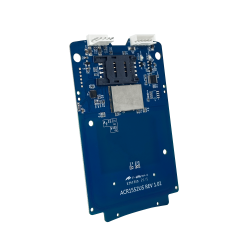
PR1060
Préparez votre achat
Choisissez la prochaine étape de votre projet. Précisez vos besoins pour que la demande porte sur le modèle et la configuration adaptés.
- Échantillons d’évaluation
- Échantillons payants
- Garantie
- Garantie d’un an
Confirmez le prix des échantillons, la configuration exacte, la prise en charge au titre de la garantie et les conditions de transport dans le devis ou la commande.
Informations à joindre à votre demande
- Modèle et quantité
- Indiquez le modèle ou la fonction recherchée, la quantité d’évaluation et la quantité d’achat prévue.
- Destination et application
- Précisez le pays de livraison, l’usage prévu et la date de livraison souhaitée.
- Cartes et plateforme
- Indiquez le type de carte ou de tag, le système d’exploitation et sa version, la connexion et les besoins logiciels.
Questions à résoudre avant de commander
- Avec quelle carte, quel tag ou quel document d’identité le produit doit-il fonctionner, et quelles données faut-il lire ou écrire ?
- Quel appareil hôte, système d’exploitation et logiciel seront utilisés ? Vérifiez la compatibilité avec votre configuration avant de commander.
Si vous avez besoin d’un SDK ou d’un kit de développement, précisez les éléments matériels et logiciels souhaités, puis faites confirmer le contenu du kit et les conditions de licence.
Présentation
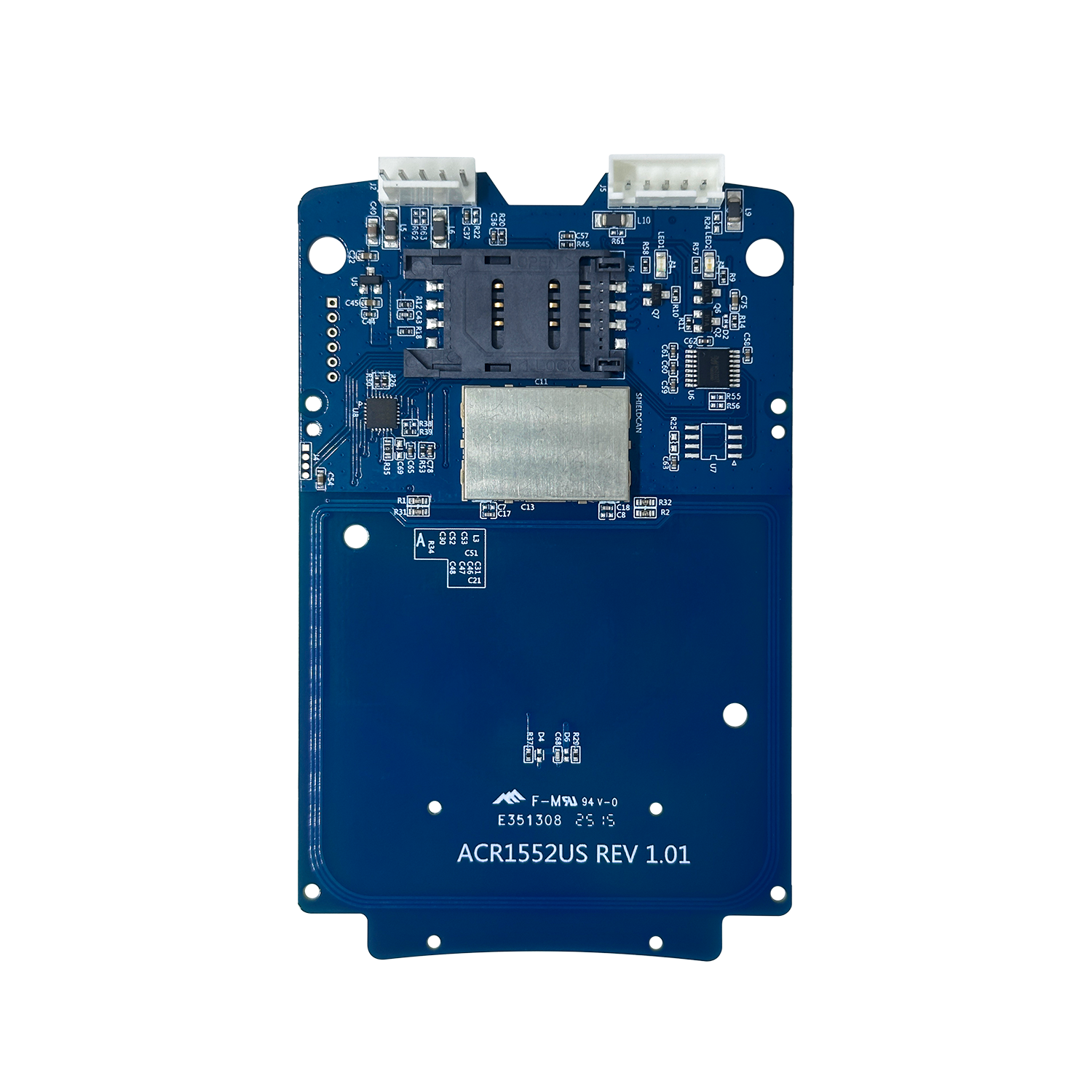
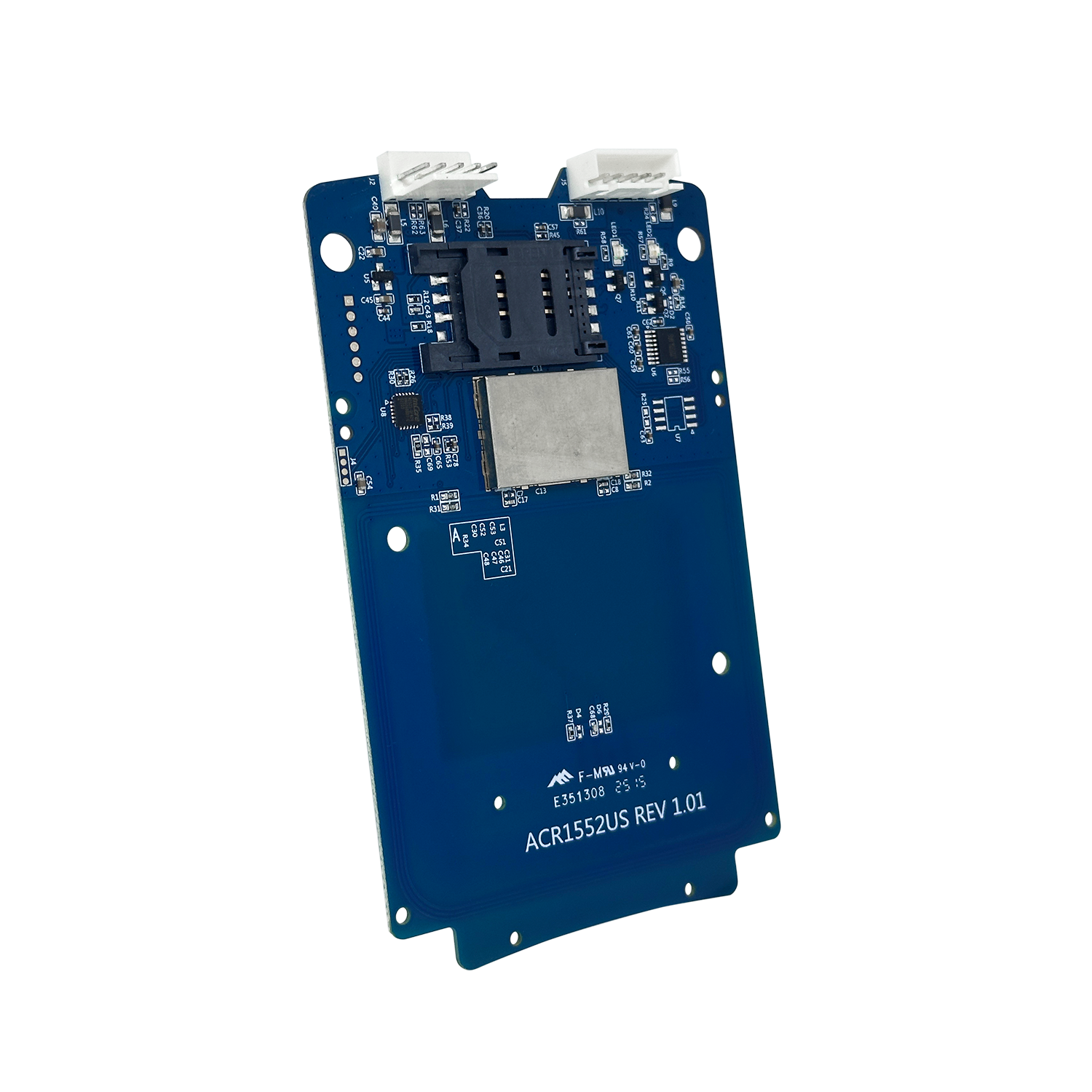
Module de lecture sans contact à interface principale USB, avec antenne intégrée et emplacement SAM pour systèmes embarqués. Liaison série RS-232 (niveaux TTL) sur demande ; configuration, niveaux électriques et brochage à confirmer.
Présentation du fabricant (en anglais)
The PR1060 is a 13.56 MHz USB/Serial NFC reader module with a built-in antenna and an ISO 7816-compliant SAM slot for enhanced security. It supports ISO 14443 Type A/B, MIFARE Classic®, ISO 15693, and ISO 18092 standards, offering a reading distance of up to 70 mm. The device provides high-speed communication of up to 848 Kbps for ISO 14443 and 26 Kbps for ISO 15693. It operates in reader/writer, card emulation, and keyboard emulation modes (USB only), and also supports extended APDU and USB firmware upgrades.
Key Features
- Smart Card Support: Compatible with ISO 14443 Type A & B, MIFARE®, FeliCa, ISO 18092 NFC, and ISO 15693 cards.
- High-Speed Communication: Operates at up to 848 kbps
- Secure SAM Slot: ISO 7816-compliant SAM slot for enhanced security
- Dual Interface: Supports both USB and RS-232 for flexible integration with a wide range of systems.
Flexible NFC Modes
Supports three operating modes:
- Smart Card Reader/Writer
- Card Emulation
- Keyboard Emulation
Ideal for applications like payments, access control, ticketing, loyalty programs, and smart marketing.
Broad Compatibility
Works seamlessly with Windows®, Linux®, macOS®, and Android™, making it a reliable and adaptable solution for industries like finance, healthcare, and government.
Fonctionnalités
- USB 2.0 Full Speed Interface or RS-232 (TTL/UART, upon request)
- CCID Compliance
- Read/Write speed up to 848 kbps
- Built-in antenna for contactless tag access, with card reading distance of up to 70 mm (depending on tag type)
- Supports ISO 14443 Type A and B cards, ISO 15693 Cards and ISO18092 NFC
- Supports MIFARE® (T=CL), FeliCa, NFC tags, SRI/SRIX, CTS, Innovatron, Picopass, Topaz Card
- Built-in anti-collision feature
- Supports extended APDU (max. 64 kbytes)
- SAM Interface: ISO 7816-compliant SAM slot, Class A (5V)
- Supports various NFC modes: Smart Card Reader/Writer Mode, Card Emulation Mode, Keyboard Emulation Mode
- Application Programming Interface: Supports PC/SC and CT-API (through wrapper on top of PC/SC)
- Peripherals: 2x user-controllable LED (Blue & Green), user-controllable buzzer (Monotone)
- USB Firmware Upgradability
Caractéristiques techniques
| Category | Details |
|---|---|
| Physical Characteristics | |
| Dimensions (mm) | Main Body: 106.6 x 67.0 x 16.0 mm; Antenna: 65.0 x 60.0 mm |
| Weight (g) | 20 g ± 0.2 g |
| USB Interface | |
| Current Consumption | Max. 300 mA |
| Supply Voltage | 5VDC |
| Connector Type | USB Port connector (J2): 5-pin, Molex KK 254 Wire-to-Board Header compatible; Serial Port Connector (J5): 5-pin, JST B5B-XH-A compatible |
| Protocol | USB or RS-232 (TTL, upon request) |
| Speed | USB 2.0 Full Speed (12 Mbps), compatible with USB 3.0 |
| Cable Length | 1.5 m, Detachable (Optional) |
| Contactless Smart Card Interface | |
| Standard | ISO 18092 NFC, ISO 14443 Type A & B, ISO 15693, MIFARE®, FeliCa |
| Protocol | ISO 14443-4 Compliant Card (T=CL); MIFARE® Classic Card (T=CL); ISO 15693; ISO 18092 NFC Tags; FeliCa and Topaz |
| SAM Card Interface | |
| Clock Frequency | 5 MHz, up to 10 MHz (upon request) |
| Read/Write Speed | 13.4 kbps – 1,250 kbps |
| Standard | 1 x ISO 7816 Class A (5V, 3V) Standard SIM size slot |
| Protocol | T=0, T=1 |
| Built-in Peripherals | |
| LED | 2 x Programmable LED: Blue and Green |
| Buzzer | 1 x Programmable Buzzer (Mono-tone) |
| Other Features | |
| Firmware Upgrade | Supported |
| Certifications/Compliance | |
| Certifications/Compliance | Certifications: IEC/EN 62368, CE, UKCA, FCC, VCCI, RoHS, REACH, Microsoft® WHQL. Standard: USB CCID, PC/SC, WEEE |
| Device Driver Operating System Support | |
| Device Driver Operating System Support | Windows®, Linux®, macOS®, Android™ |
Images
Téléchargements
| Type | Titre | Taille | Mise à jour |
|---|---|---|---|
| Logiciel | Configuration Tool (Keyboard Emulation, UID) | 567.78 KB | 27-Oct-2025 |
| Manuel | ACS ApduTool (iOS) Application Note | 118.31 KB | 23-Feb-2024 |
| Pilote | PC/SC Driver Installer (Windows®) | 5.83 MB | 12-Dec-2025 |
| Pilote | PC/SC Driver Installer (Linux®) | 4.30 MB | 20-Nov-2025 |
| Pilote | PC/SC Driver Installer (macOS®) | 281.65 KB | 17-Nov-2025 |
| Logiciel | Android EVK | 1.46 MB | 25-Nov-2025 |
| Manuel | Reference Manual of ACM1552D-C7 | — | — |
| Fiche technique | Technical Specification of ACM1552D-C7 | — | — |
| Manuel | User Manual of ACM1552D-C7 | — | — |
Autres articles sur les achats OEM
USB ou UART pour les modules NFC OEM : points à confirmer avant de commander
Un connecteur de carte électronique ne définit pas le protocole hôte. Établissez les exigences d’interface avant de choisir un module NFC USB ou série.
Lire l’article